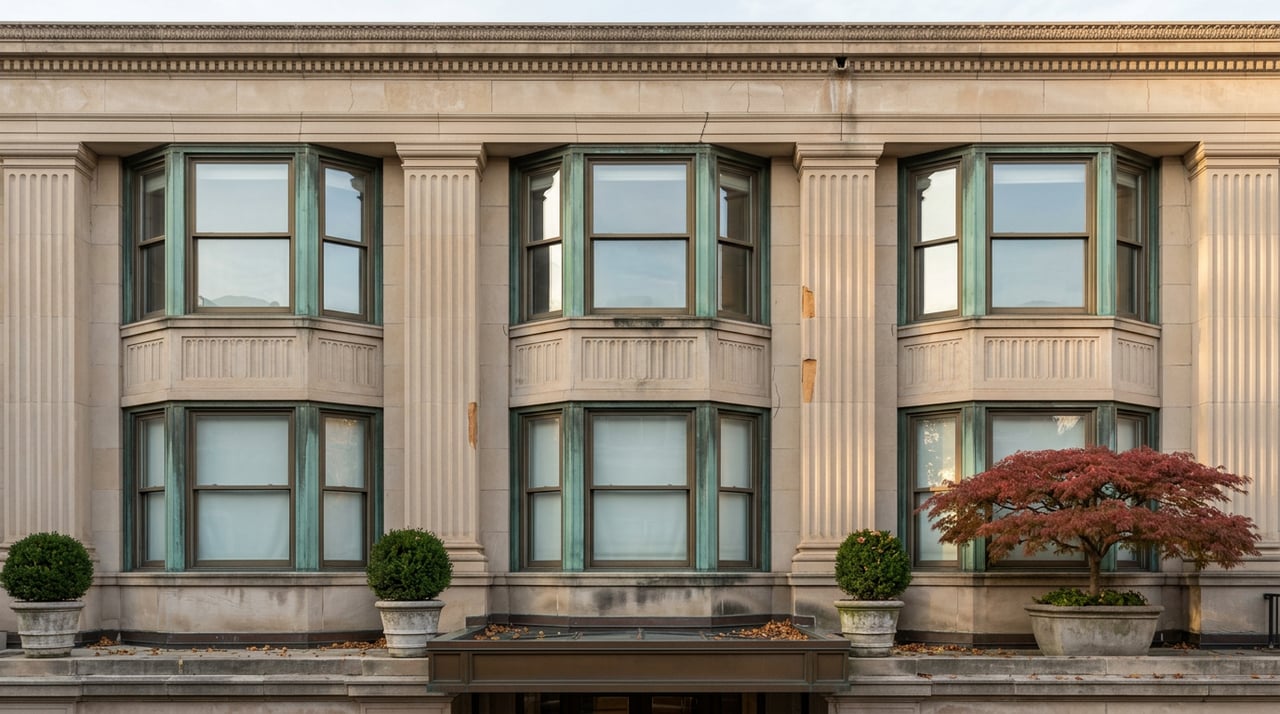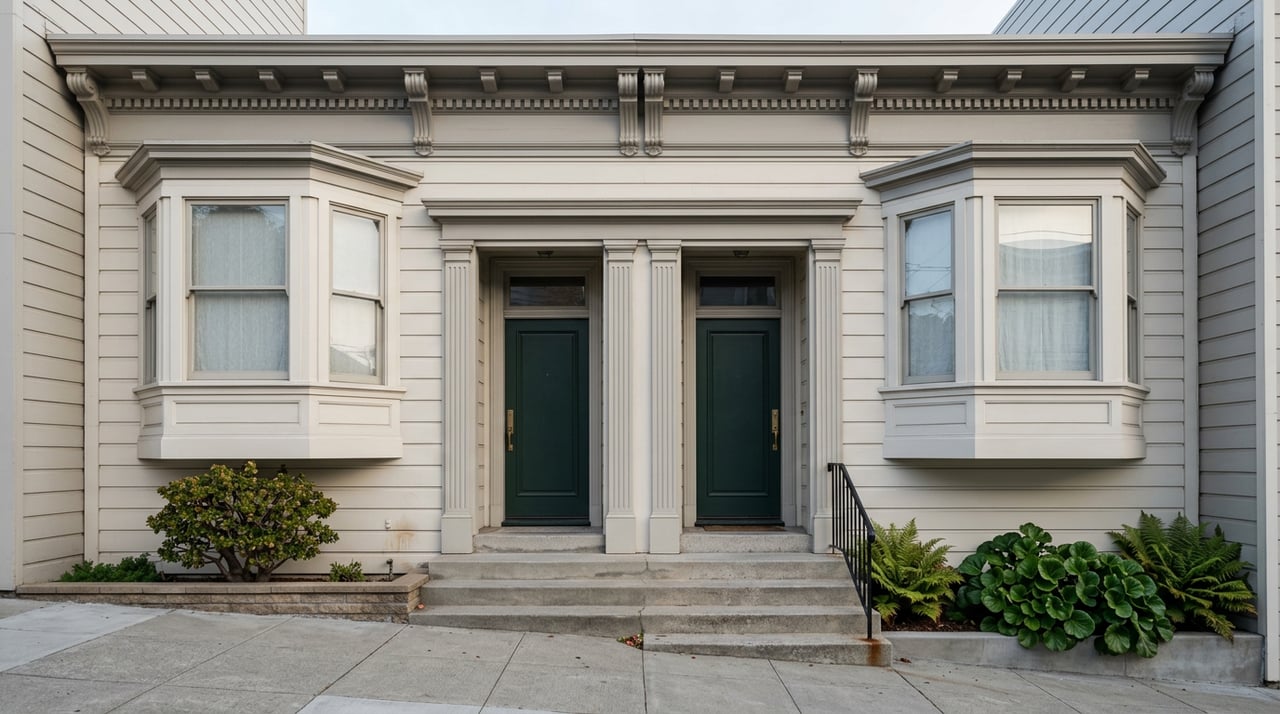
A client called me in July with two Alameda properties on her spreadsheet. One was a six-unit building near the Park Street corridor, built in the early twentieth century, tenants in place for years. The other was a new condo unit going up at Alameda Point, the former Naval Air Station now filling in with townhomes and low-rise buildings. Same city. Same zip code range. She wanted to know why her underwriting model gave her two completely different answers for how fast rents could grow.
The answer has nothing to do with location, school access, or walkability. It comes down to a single date stamped somewhere in each building's permit history: February 1, 1995.
The Cutoff That Doesn't Show Up in the Listing
Alameda's local rent control ordinance, adopted by voters as Measure L1 in November 2016 and in effect since 2017, covers residential buildings with two or more units on a legal lot that were constructed before February 1, 1995. If a multi-unit property predates that line, the city's Annual General Adjustment sets the ceiling on how much you can raise rent each year. If it doesn't, you're operating under California's statewide Tenant Protection Act, AB 1482, instead.
That distinction matters more in Alameda than it does in neighboring cities. According to RentCheckMe, San Francisco and Berkeley both carve out blanket exemptions for single-family homes and condos. Alameda does not. Here, the trigger is unit count and construction date, full stop. A single-family home with a legal second unit built in 1980 can land inside the local ordinance the same way a six-unit apartment building does. A brand-new duplex built last year cannot, no matter how many units it has.
The building's age decides which set of rules governs your rent roll. The neighborhood does not.
What "Local" Actually Costs You Right Now
SLPM Property Management notes that for the twelve months running September 1, 2025 through August 31, 2026, the Annual General Adjustment sat at 1.0%, the statutory floor under the ordinance's formula, which calculates the AGA at 70% of the change in the Bay Area Consumer Price Index, bounded between a 1.0% floor and a 5.0% ceiling. Effective September 1, 2026, the City of Alameda Rent Program has set the new AGA at 2.7% for the period running through August 31, 2027.
Meanwhile, AB 1482's statewide cap held at 6.3% through July 31, 2026, and rose to 8.8% for the period that began August 1, 2026. For an investor comparing two properties right now, that's the difference between a 2.7% ceiling on one building and an 8.8% ceiling on another, sitting inside the same city limits.
| Pre-1995 multi-unit (2+ units) | Properties governed by AB 1482 | |
|---|---|---|
| Governing rule | Alameda Rent Control Ordinance (AMC Ch. VI, Art. XV) | State Tenant Protection Act, AB 1482 |
| Current annual cap | 2.7% (Sept 1, 2026 – Aug 31, 2027) | 8.8% (Aug 1, 2026 – July 31, 2027) |
| How the cap is calculated | 70% of Bay Area CPI change, floor 1.0%, ceiling 5.0% | 5% plus local CPI, capped at 10% |
| Annual local registration | Required, filing and fee due August 31 | Not required locally, though just-cause eviction rules still apply |
Why Alameda Point Plays by a Different Rulebook
Walk the multi-unit stock along Park Street and Webster Street and you're looking at buildings that predate the ordinance by decades. A recent 6-unit listing sat a few blocks from the Park Street commercial district. A 10-unit building nearby ran roughly 8,800 square feet on a lot just under a quarter acre. A seven-unit Art Deco building near the lagoon and South Shore Center dates to 1923. Two side-by-side duplexes on Briggs Street sold together this year for just under $2 million. Every one of those buildings sits inside the local ordinance because every one of them was built well before February 1995.
Alameda Point is the opposite case. The former Naval Air Station has spent the last several years shifting from a city long resistant to new housing into one actively building it, according to reporting on the island's transformation. The West Midway project alone calls for roughly 478 market-rate condominium and townhome units across 26 acres of city-owned land, in three- and four-story buildings. None of that inventory existed before 1995. None of it will ever fall under Alameda's local rent cap. Any unit there that gets rented out is governed by AB 1482, though just-cause eviction rules still apply.
That means the newest, fastest-growing part of Alameda is also the part where an owner has the most room to move rents toward market. The oldest, most established multi-unit stock, concentrated around Park Street and Webster Street, carries the tighter ceiling. An investor comparing cap rates across the city without checking construction dates is comparing two different regulatory environments as if they were one.
The Escape Hatch Most Buyers Don't Model
Here's the part that changes how you should actually underwrite a pre-1995 building. California's Costa-Hawkins Act, which limits every local rent control ordinance in the state, requires vacancy decontrol. When a tenant in a locally-controlled unit moves out voluntarily, the owner can reset rent to market rate for the next tenant. The 2.7% AGA constrains what you can charge a sitting tenant. It does not follow the unit through a turnover.
That's worth sitting with before you write off an older Park Street triplex in favor of new construction at the Point. A building with long-tenured tenants paying well under market will feel the 2.7% constraint acutely today. The same building, priced and financed around its actual turnover schedule rather than its current rent roll, can look very different five years out. The AGA caps the path. It doesn't cap the destination.
The Paperwork That Actually Bites
Two mechanics catch investors off guard after closing, and neither shows up in a standard rent roll review.
First, registration. According to the City of Alameda Rent Program, owners of covered units must file an annual registration statement with the city's Rent Program and pay the program fee by August 31 each year, reporting current rents and tenancy details under penalty of perjury. Miss that deadline and the property is placed into what the ordinance calls substantial non-compliance, which blocks any rent increase until you're back in good standing, while late fees compound at 10% per unit per month, up to a maximum 60% penalty. That's not a fine you negotiate around. It's a math problem that gets worse every month you ignore it.
Second, relocation payments. If you need to remove a tenant from a covered unit for a no-fault reason, such as an owner move-in or an Ellis Act withdrawal, the ordinance requires a payment. Confirm the current figures with the Rent Program before you assume a vacant unit is the fast path to market rent, since these amounts are subject to periodic adjustment.
Before you make an offer on any Alameda multi-unit property, confirm three things directly with the seller or the Rent Program:
- The building's actual construction date, not just its listed year built, since the February 1995 cutoff is precise
- Whether the property is currently registered and in good standing with the city
- The current rent for each unit against what a turnover reset could realistically achieve under Costa-Hawkins
A Couple of Questions Worth Asking Before You Sign
I'm buying a single-family home in Alameda with a legal second unit. Does the ordinance apply to me? Possibly, and this is the mistake buyers moving from San Francisco or Berkeley tend to make. Those cities carve out blanket exemptions for single-family homes. Alameda doesn't. If your property has two or more units on one legal lot and the structure predates February 1995, it can fall inside the local ordinance regardless of how the county classifies the property type.
Does the higher AB 1482 cap mean I should just target post-1995 construction and skip the older buildings entirely? Not necessarily. Older Alameda buildings near Park Street and Webster Street are typically priced with the local cap already reflected in their in-place rents, and Costa-Hawkins gives you a path to market rate at turnover regardless of which regime governs the building. The right call depends on your hold period and how soon you expect turnover, not on which cap number is bigger.
Where This Leaves You
The date on a building's certificate of occupancy is doing more work in Alameda's investment market than most people realize when they're comparing cap rates on paper. A property near Park Street and a property at Alameda Point can sit ten minutes apart and answer to entirely different rent ceilings, entirely different registration obligations, and entirely different eviction costs. Underwriting an Alameda multi-unit purchase without confirming which side of February 1995 the building falls on means underwriting half the picture.
If you're comparing multi-unit properties in Alameda or anywhere else in the East Bay and want a second set of eyes on the numbers before you write an offer, Susanne Alexander has spent years underwriting exactly this kind of deal. Let's connect to talk through what your return actually looks like once the regulatory picture is on the table.
This article is general information, not legal, tax or financial advice. Consult a qualified professional about your situation.